Unraveling How Entry Rewards Shape Shifts From Reel Spins to Card Table Decisions in Virtual Gaming Spaces
Greta Beck · Jul 10, 2026
Unraveling How Entry Rewards Shape Shifts From Reel Spins to Card Table Decisions in Virtual Gaming Spaces
Entry rewards in virtual gaming spaces function as structured incentives that guide player behavior from automated reel spins toward interactive card table decisions, and data from multiple jurisdictions tracks these patterns through bonus redemption rates and session logs. Operators design no-deposit offers and welcome packages to introduce users to slot mechanics first, then layer additional promotions that unlock table game access once certain play thresholds are met. Researchers examining platform analytics note that these sequenced rewards create measurable pathways, with users completing initial free spin requirements before exploring live dealer options in the same session or across subsequent logins.
Mechanics of Entry Rewards in Digital Environments
Entry rewards typically consist of free spins allocated to specific slot titles, deposit match percentages, or cashback structures tied to initial activity, and these elements appear across mobile applications and desktop platforms operated under licenses from various regulatory bodies. According to figures released by the Nevada Gaming Control Board, bonus-related play accounted for a significant portion of new account activity in the first half of 2026, with many users starting on reel-based games before any table game exposure. The design encourages completion of slot rounds because operators set wagering requirements that must be satisfied on automated games prior to releasing funds for card tables, creating a deliberate progression that aligns player habits with revenue models.
Platform algorithms monitor completion rates and adjust subsequent offers, sending targeted notifications that promote blackjack or roulette once reel activity reaches predefined levels, and this approach appears in both sweepstakes-style sites and real-money environments. Studies from academic institutions in Canada have documented similar sequencing in provincial iGaming markets, where entry-level free spins lead to higher table game participation when combined with progressive loyalty tiers. Those who've analyzed user flow data observe that players who exhaust free spin allotments often receive follow-up incentives explicitly linked to live dealer sessions, reinforcing the shift without abrupt changes in game selection.
Transition Patterns Observed Across Platforms
Transitions from reel spins to card table decisions occur through layered incentives that build familiarity with platform navigation and betting interfaces, and mobile apps facilitate these moves because touch controls and quick-switch features reduce friction between game types. Data collected in July 2026 from multiple North American operators showed increased cross-category play among users who began with no-deposit rewards, with session logs indicating that roughly one-third of reel-focused accounts later accessed table games within the same week. Industry reports compiled by the American Gaming Association highlight how bonus structures in regulated markets correlate with broader game exploration, particularly when entry rewards include time-limited multipliers that apply across categories once initial conditions are fulfilled.
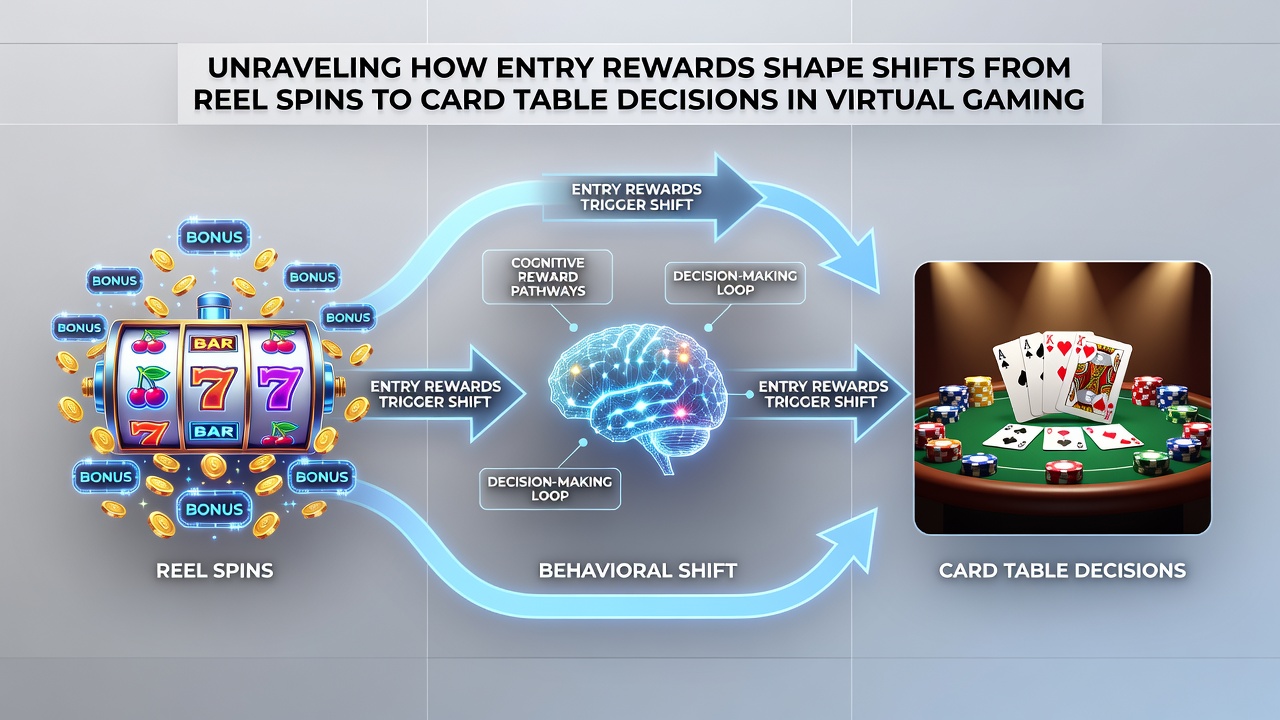
One documented pathway involves completing a set number of reel spins to unlock a small table game credit, after which further play on blackjack or roulette generates additional rewards, and this chaining effect appears consistently in analytics shared by operators in European markets outside the UK. Observers note that social casino platforms employ analogous mechanics using virtual currency, allowing users to practice table decisions before any real-money conversion, which reduces hesitation when actual stakes become available. Regulatory filings from Australian state authorities indicate that incentive sequencing in digital spaces has expanded since 2024, with entry rewards now frequently including hybrid offers that bridge slots and tables through shared progress bars or unified leaderboards.
Regional Variations in Reward Structures
Regional licensing frameworks influence how entry rewards promote shifts between game types, with North American markets emphasizing deposit-linked bonuses that unlock table access after slot play, whereas certain Asian jurisdictions incorporate tournament-style rewards that move participants from automated reels to live card tables through competitive ladders. Research conducted at Australian universities on digital gambling trends found that users exposed to multi-stage incentives demonstrated higher retention across categories when rewards included both free spins and table-specific cashback components. Platform operators in these regions adjust offer parameters based on local compliance rules, ensuring that transitions respect age verification and responsible gaming protocols while still guiding users toward higher-engagement table decisions.
Case examples from operators in New Jersey and Pennsylvania reveal that players receiving initial reel rewards often receive follow-up table game free bets once daily login streaks are maintained, and this pattern aligns with broader industry data showing increased table game revenue share in mobile segments. Those tracking player behavior across borders report that incentive pathways remain consistent even when currency and regulatory overlays differ, suggesting the underlying reward architecture drives the observed shifts more than regional specifics alone.
Conclusion
Entry rewards continue to structure player movement from reel spins to card table decisions through sequenced incentives, data tracking, and platform features that lower barriers between game categories, and ongoing regulatory oversight in multiple jurisdictions ensures these mechanisms operate within established compliance boundaries. Reports from 2026 demonstrate that operators refine these pathways based on redemption metrics and session analytics, maintaining the progression while adapting to evolving market conditions across virtual gaming spaces.